Game theory · Adversarial planning
King + rook vs. king.
A solver built around best response.
An ECE 270 final project treating the KRK endgame as a finite, sequential, zero-sum game with adversarial best response at every move.
Dodge Stalemate
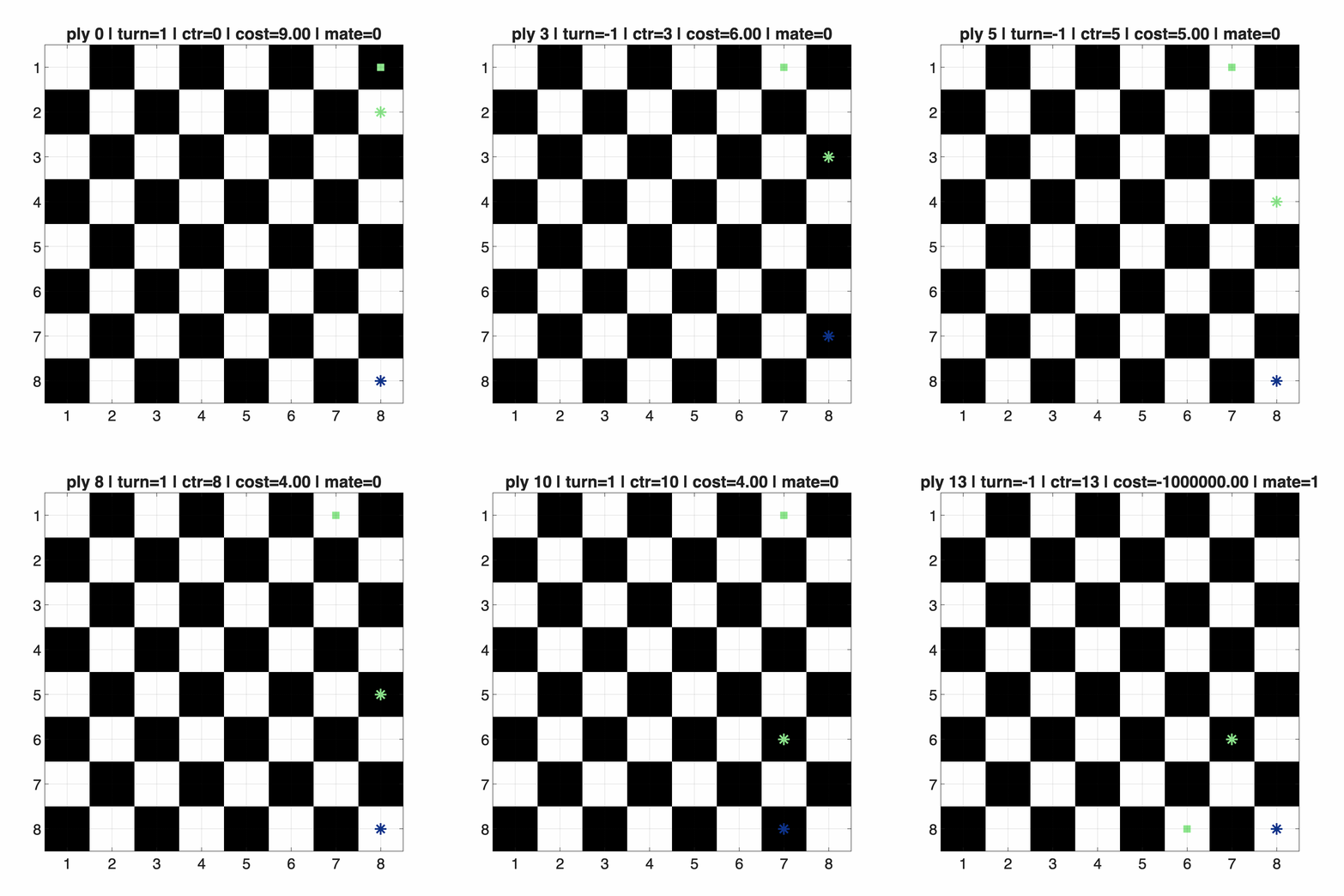
Click to open GIF
Patient Rook
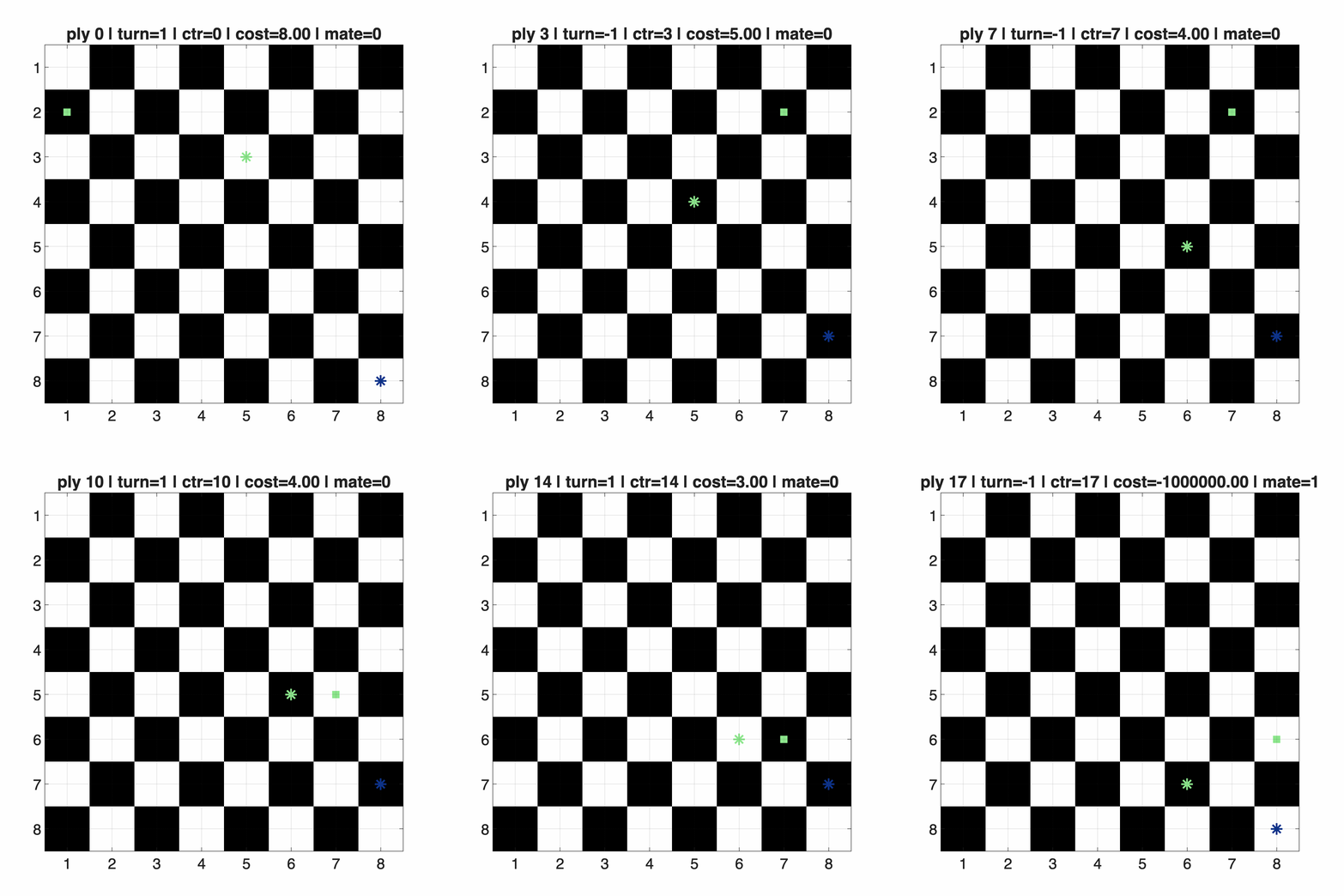
Click to open GIF
Middle-File Mate
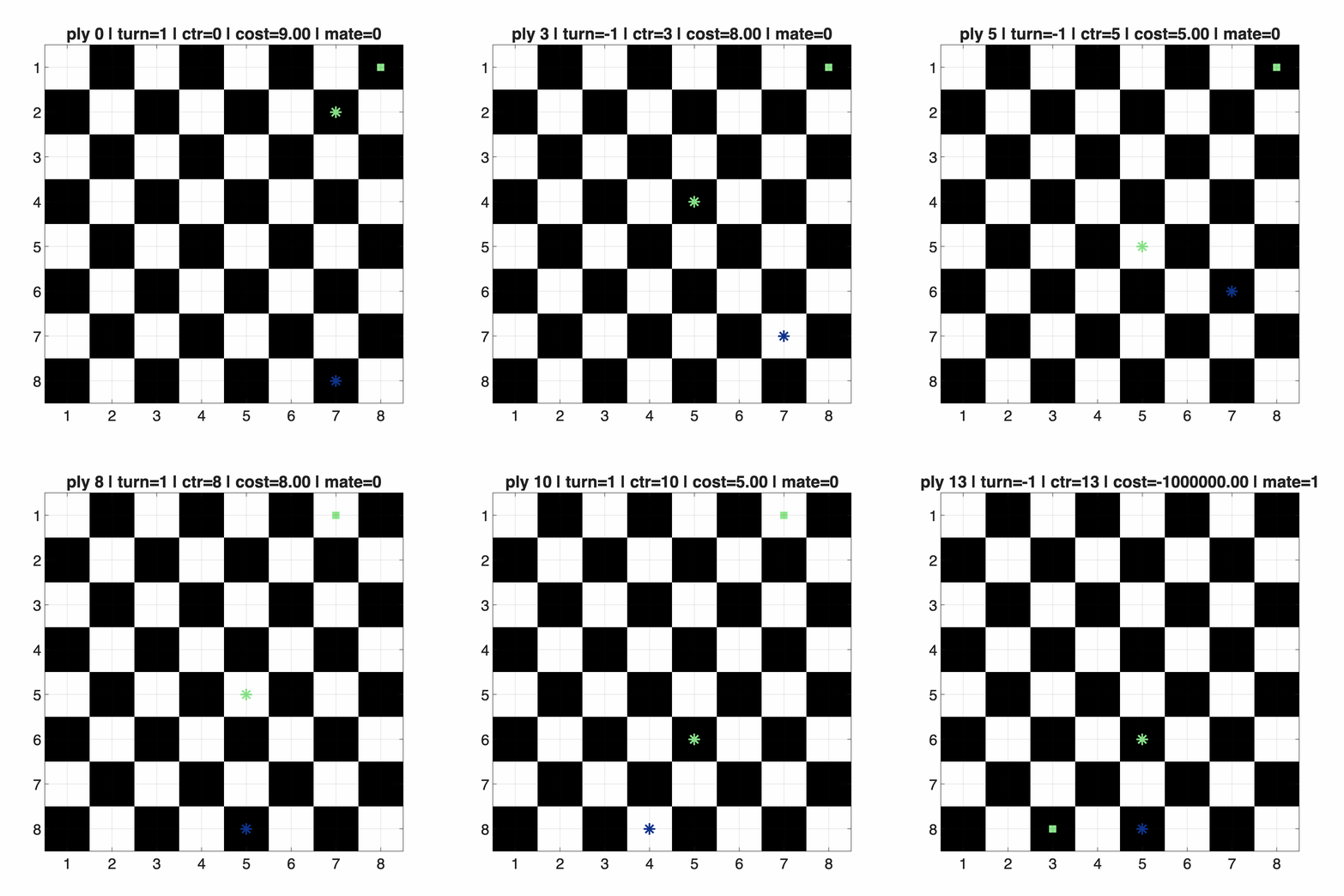
Click to open GIF
Game-Theoretic Framing
The endgame is formulated as a sequential zero-sum game:
- White (minimizer): force checkmate while avoiding stalemate.
- Black (maximizer): avoid mate, delay loss, or capture the rook.
Decision-making follows the same principle emphasized in class: assume the opponent plays a best response to your policy at every stage.
State is encoded as a 65-element vector: 64 board entries + 1 move counter (even/odd parity for side-to-move), enabling explicit dynamic-state recursion.
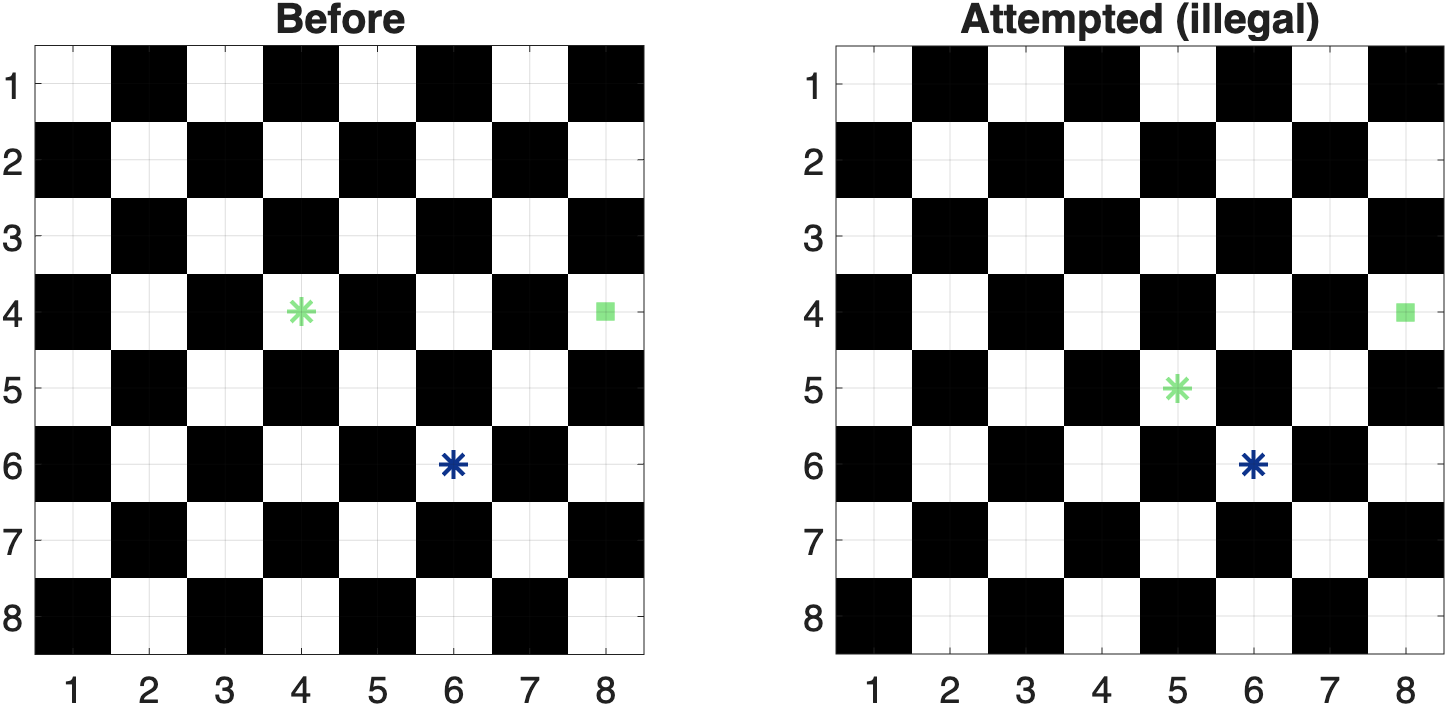
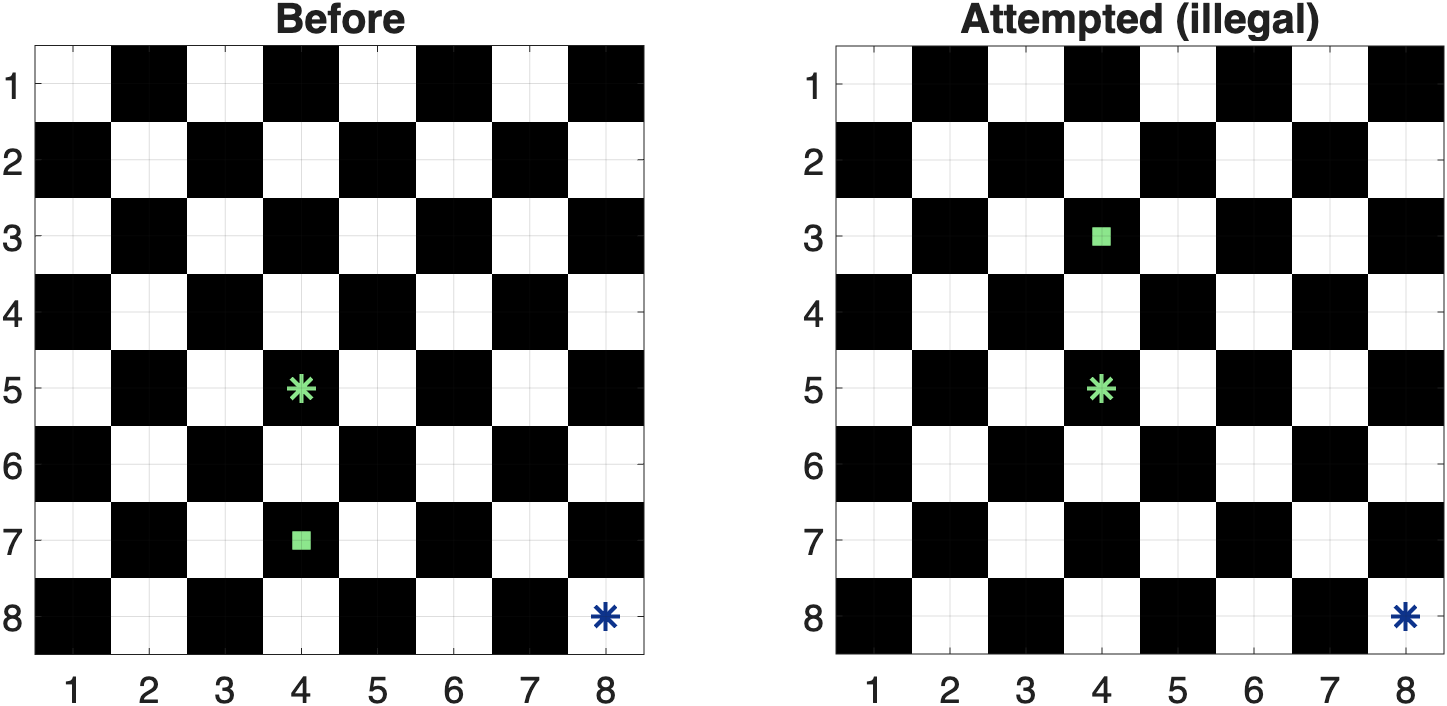
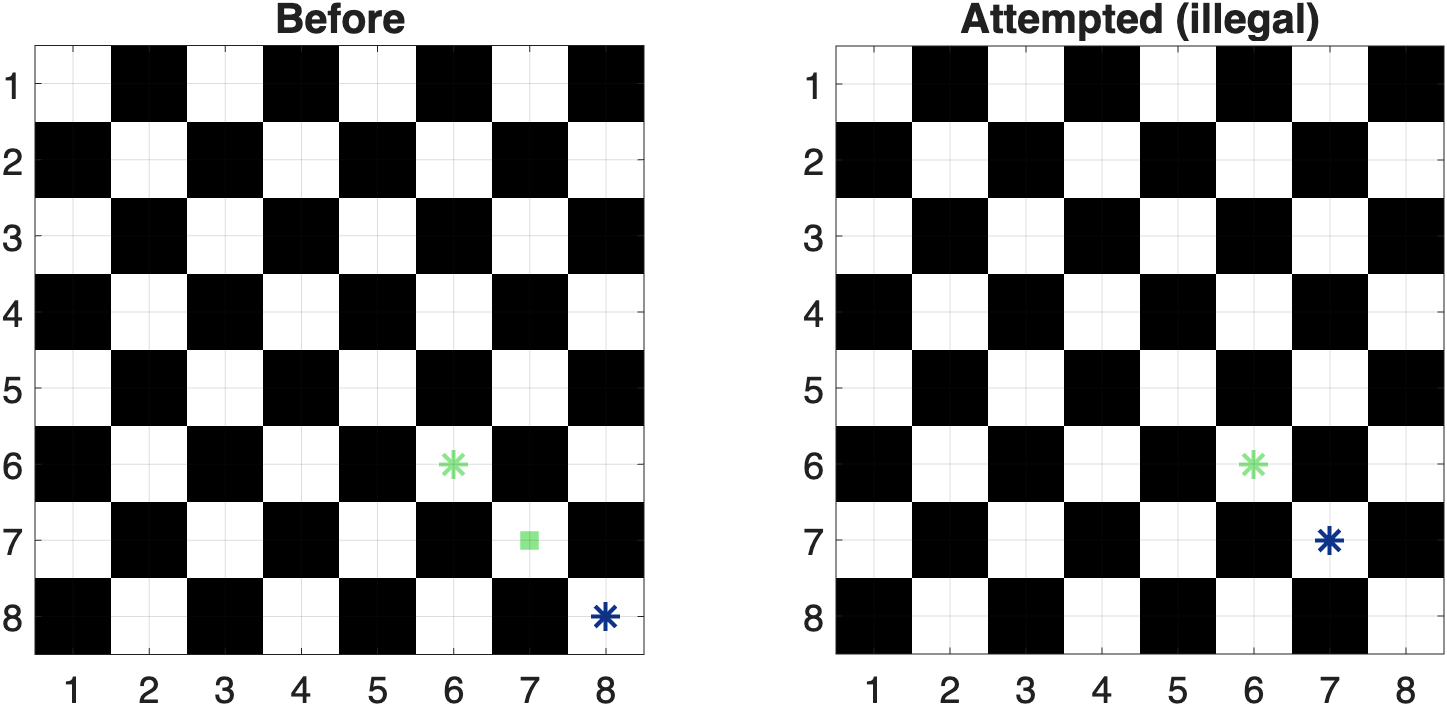
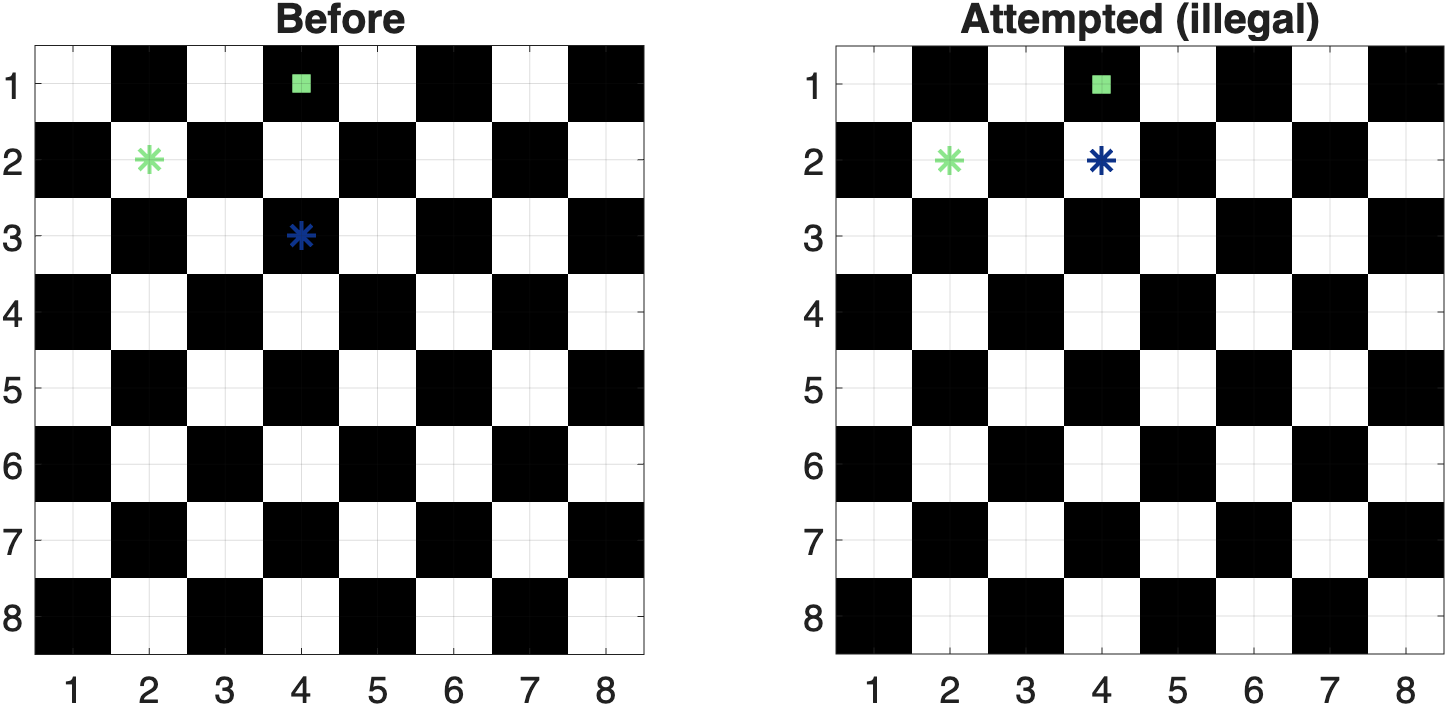
Legal-Move Constraints
From Game Theory Principles to Code
Core strategy computation
- depth-limited minimax
- alpha-beta pruning
- best-response assumption at each ply
Dynamic-programming flavor
- memoized recursive evaluation
- persistent transposition-style cache reuse
- terminal-state early exits
Payoff / Cost Design
The payoff design follows course principles by combining terminal rewards/penalties with positional shaping terms.
- strong terminal preference for checkmate
- strong penalties for stalemate and rook loss
- positional shaping using black-king mobility ("oxygen") and king geometry
Project Assets
Final Presentation (PDF)
Slides from the final class presentation: formulation, legality model, minimax/alpha-beta/memoization design, and rollout examples.