Constrained Satellite Rendezvous With MPC

Final project exploring Hill-Clohessy-Wiltshire (HCW) relative satellite dynamics with zero-order-hold discretization, constrained control, and controller tradeoffs between convergence speed and fuel usage.

Problem + Model

Chaser-target relative motion is modeled in the Hill frame using the linear HCW equations, then discretized with a zero-order hold map for controller synthesis and simulation.
Controller constraints include bounded acceleration magnitude per axis and terminal-state targeting. The acceleration limit used is ±0.5 mm/s2, motivated by recent constant-thrust rendezvous literature.
The project compares three controllers on a common model and random initial-condition sweeps:
  • Saturated LQR baseline
  • MPCv2: state-focused constrained MPC
  • MPCv1: economic MPC with fuel-prioritized cost
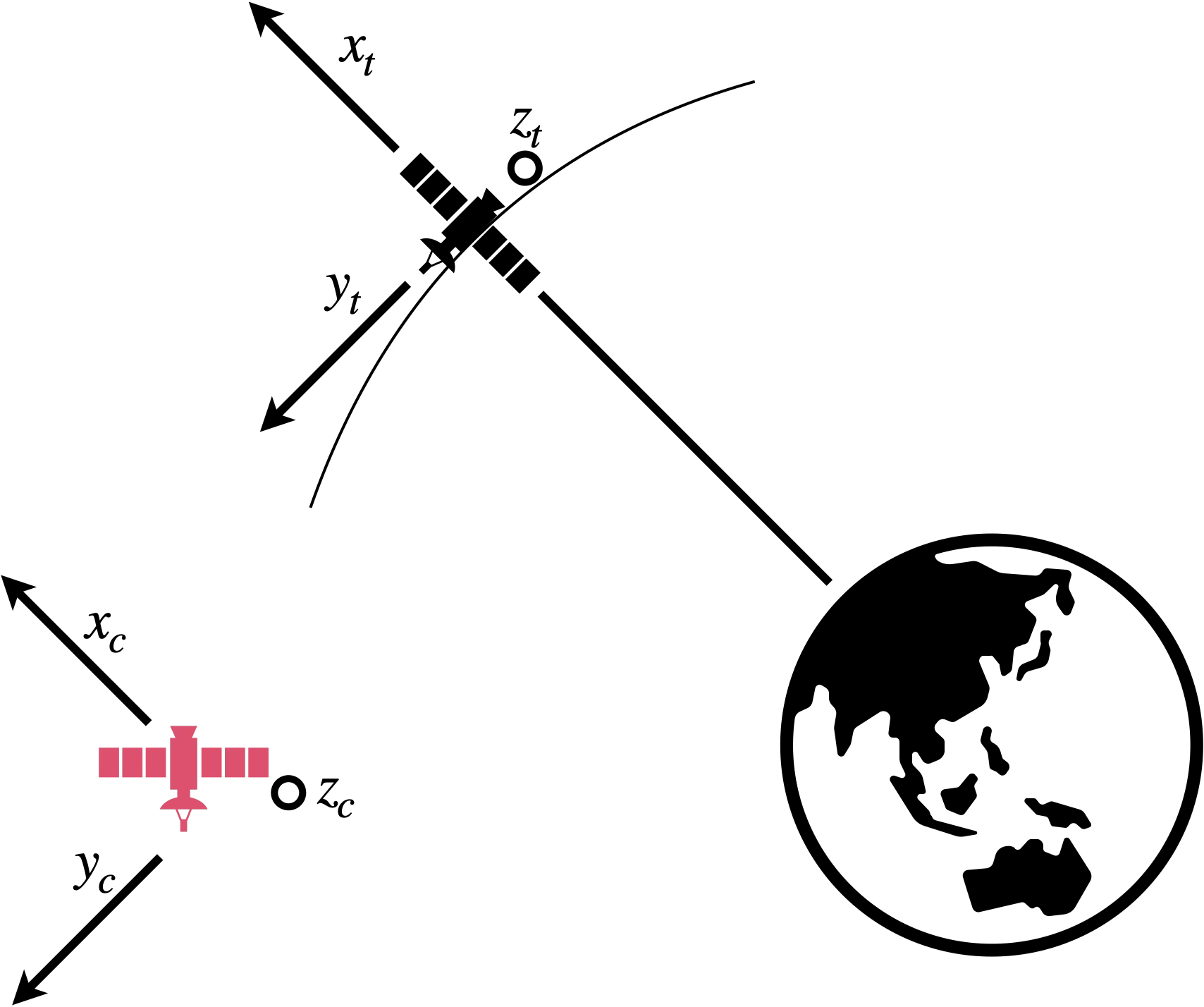
HCW Geometry

HCW relative satellite geometry

Relative-motion frame setup for rendezvous and tracking.

HCW relative satellite geometry HCW relative satellite geometry

Controller Comparisons

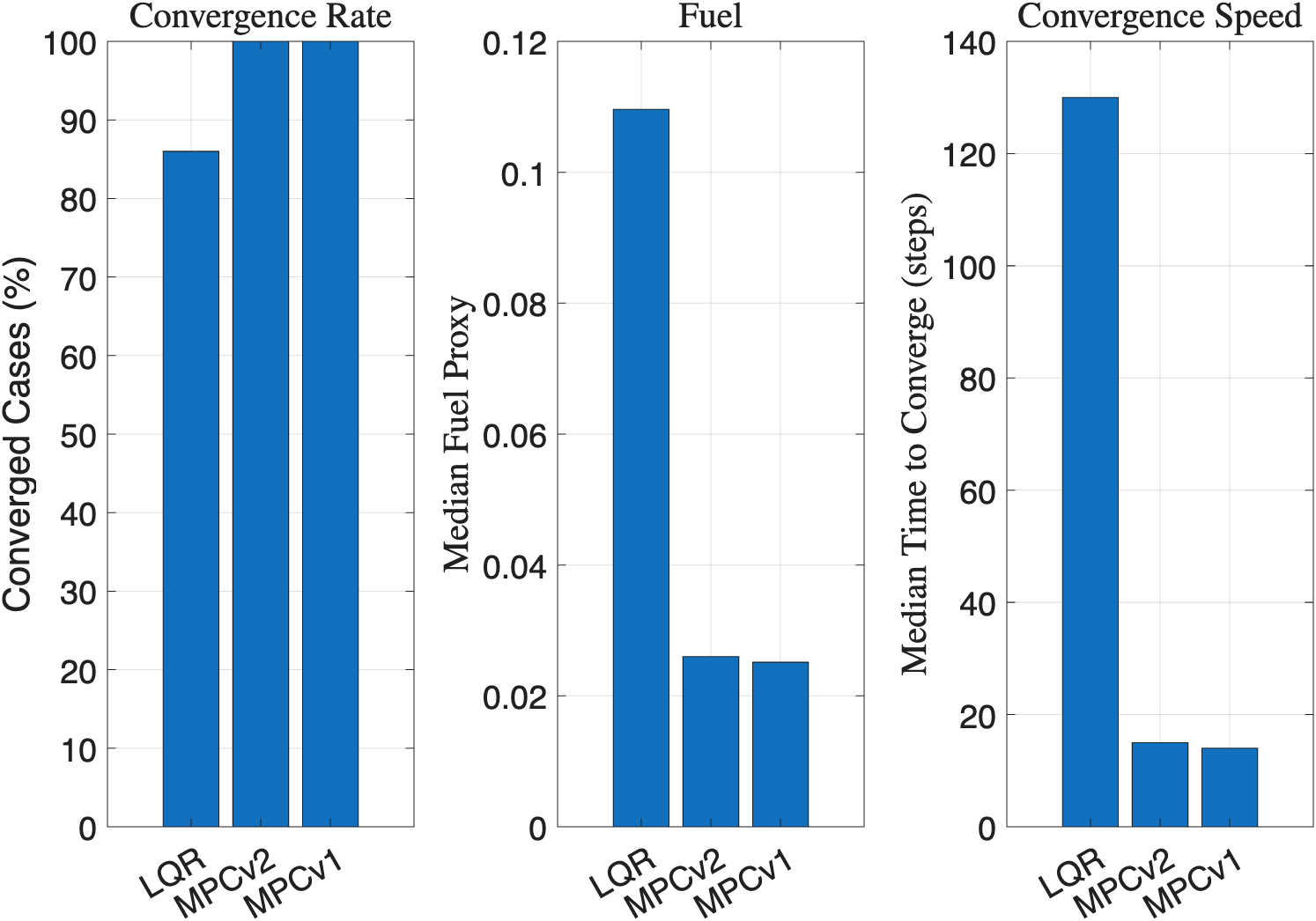
Trajectory comparison across controllers
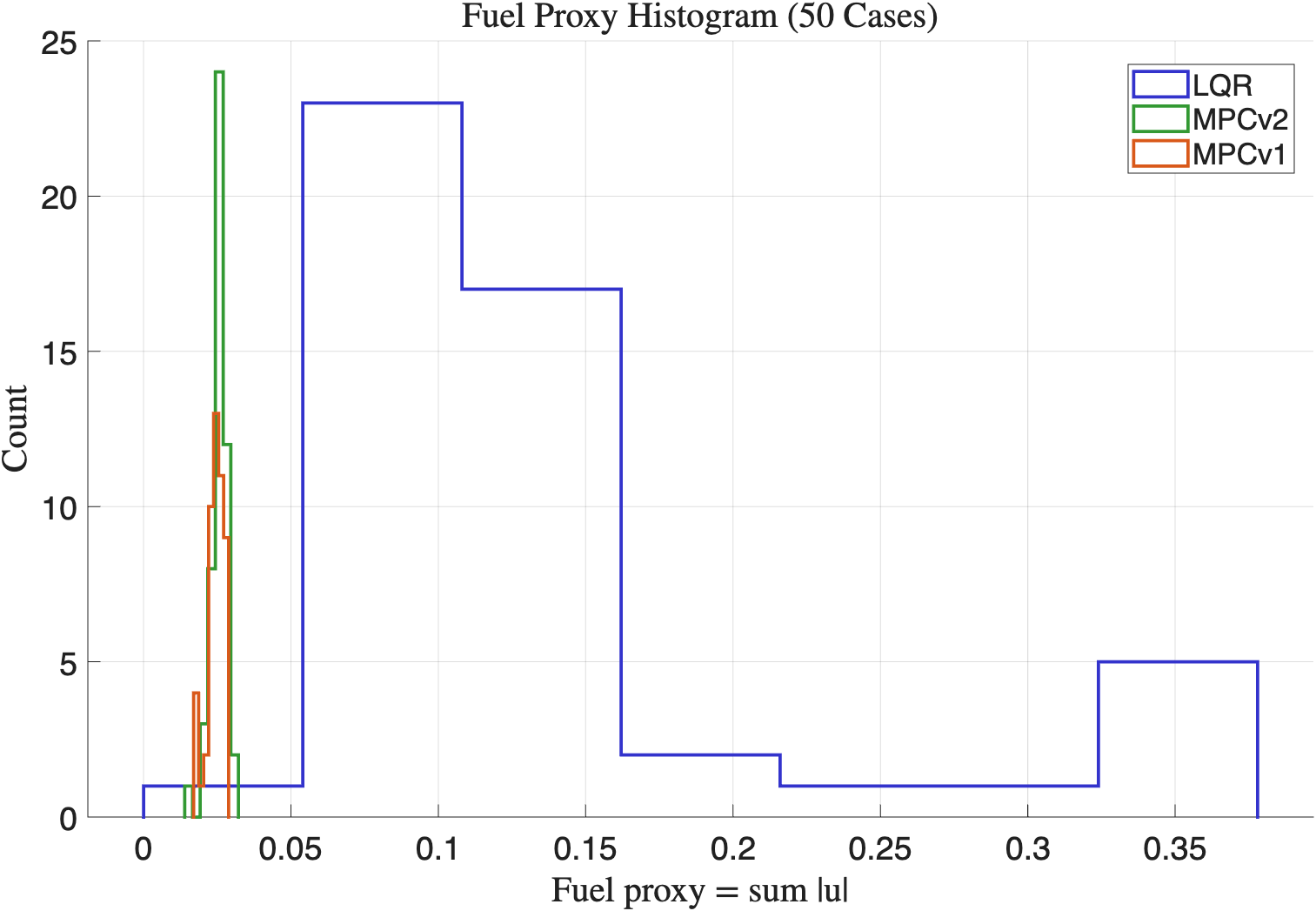
Fuel proxy histogram comparison
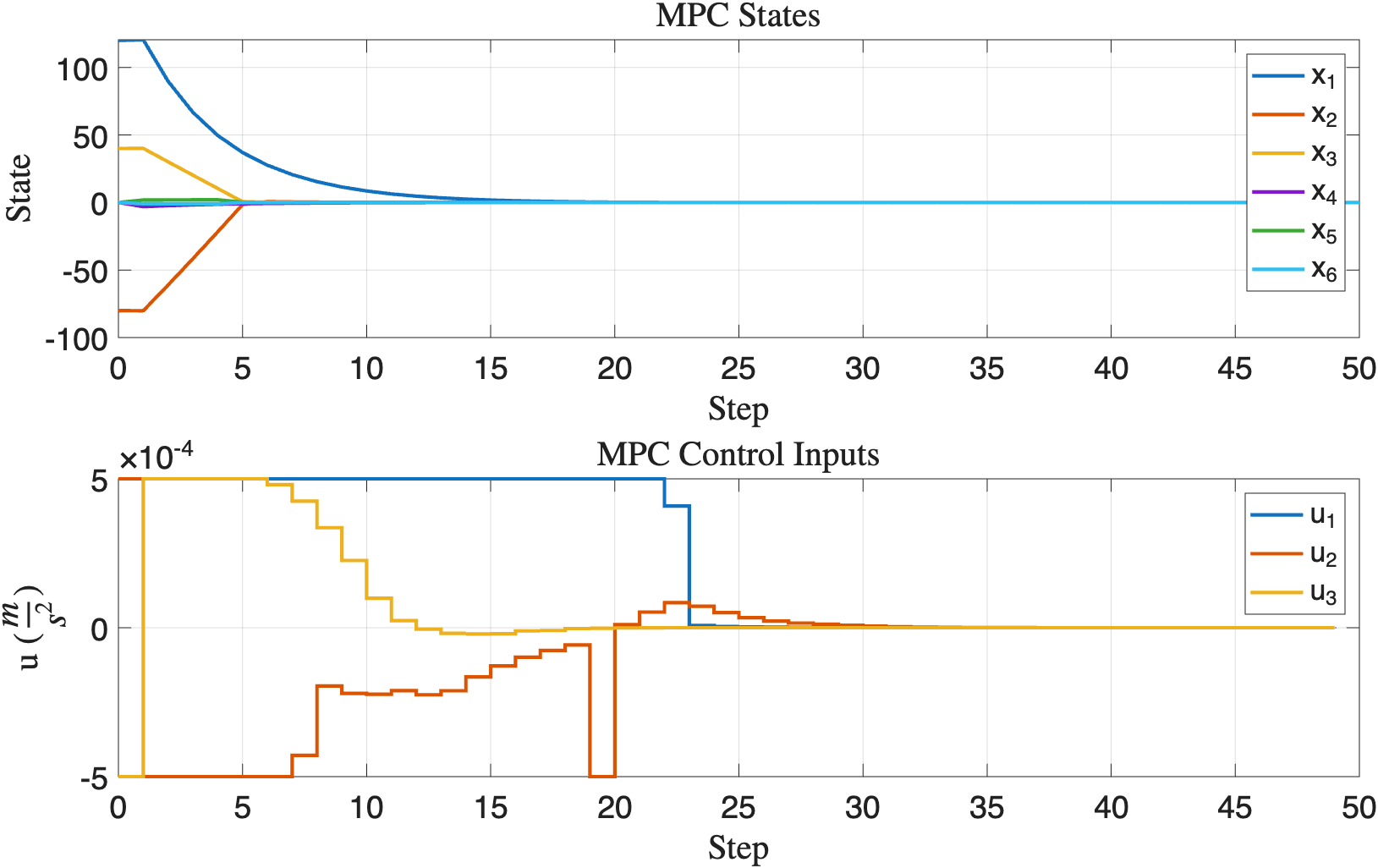
Key result: constrained MPC improved practical convergence behavior over saturated LQR under input limits, while economic MPC reduced fuel proxy relative to state-focused MPC with slower convergence.

LQR Example

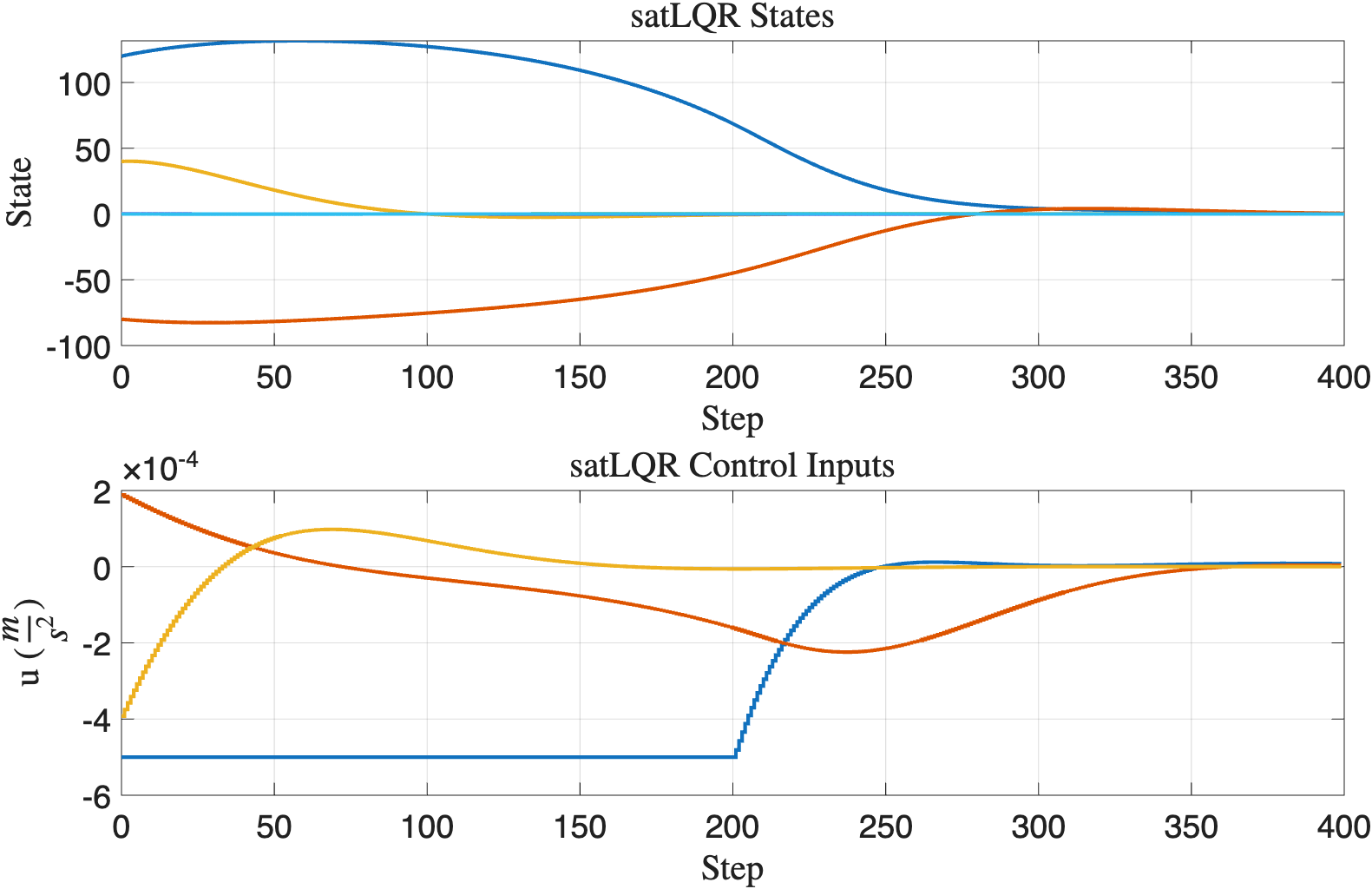
Saturated LQR response

State MPC Example

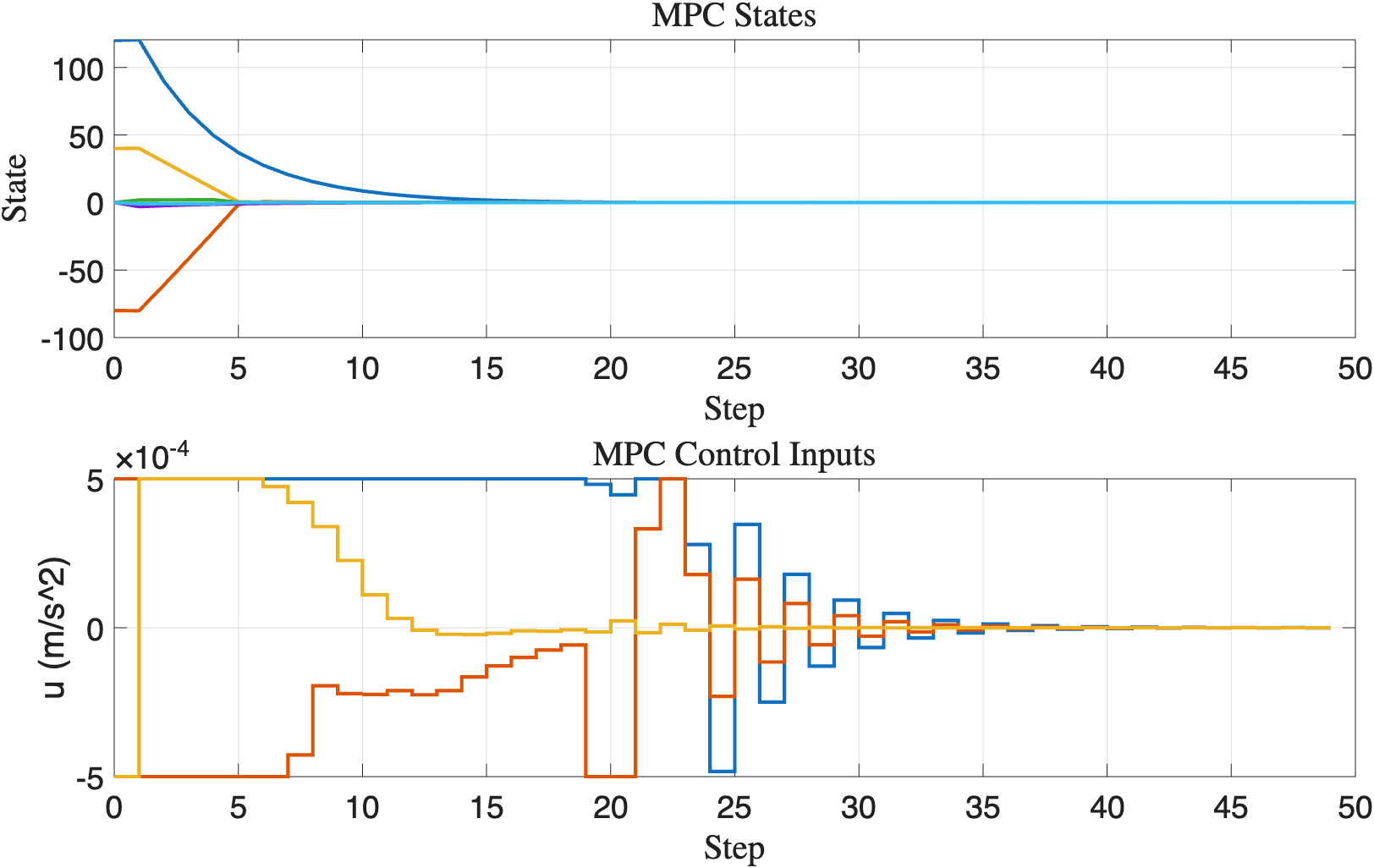
State-focused MPC response

Economic MPC Example

Economic MPC response